

Do you have more than one employee? In that case, you can't avoid the occupational health and safety (OHS) rules. Find out what this means for you and what to watch out for.
What is OHS?
OHS stands for occupational health and safety. It refers to rules set by legislation, measures and procedures designed to protect employees from workplace risks and to prevent threats to or damage to their health in the work environment.
It is an area concerned with preventing occupational accidents and protecting the health of employees and other individuals (clients, customers, etc.) who may be near the workplace.

The goal of OHS
The overall measures set out in OHS are meant to ensure that workers' health is neither endangered nor harmed. You may also know this set of measures as risk prevention. The measures are of various kinds: technological, legal, technical, organisational and administrative. Employers are helped in applying them by competent persons (OZO in Czech), also known as safety technicians or "safety officers". These are experts who advise employers on how to approach regulations and measures.
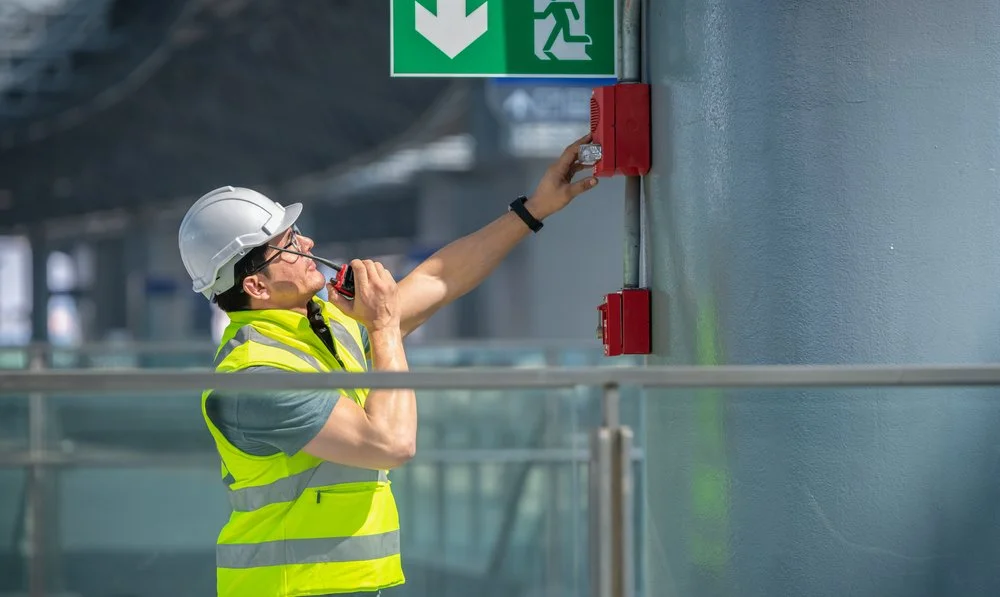
Who does workplace safety apply to?
Workplace safety is a matter for every employer who has more than one employee. Czech law defines every self-employed individual in business as an employer.
Every employer is legally obliged to take responsibility for their employees. They must therefore ensure their occupational health and safety (OHS) so that nobody comes to harm while working. In some cases, managers may also bear responsibility. Failure to meet OHS obligations can have criminal consequences. It is therefore important that you give this area due attention.
Workplace safety training
Every employer has an obligation to provide their employees with training on legal and safety regulations in the area of OHS. Every employee must attend this training, at the intervals prescribed by law. Training comes in various forms. It can be carried out either directly at the workplace, with an external training provider, or online through e-learning. It also differs by timing and by type of activity.
Training by timing
- initial training
- periodic training
- training when changing job position (change in workplace risks)
Training by type of activity
- basic training – completed by all employees
- special professional qualification – completed by employees who operate machinery or perform activities with an increased level of risk (e.g. construction work, operating a forklift, etc.)
Thorough documentation
Another obligation linked to OHS is creating documentation. This is a set of documents prepared for individual activities and risks in the organisation. These documents include the general OHS directive, the directive on issuing personal protective equipment, risk assessment and evaluation, job categorisation, records of occupational accidents and other safety regulations.
Because internal organisational changes or changes in legislation can happen at any time, you must update the documentation regularly. It is often renewed during regular OHS inspections.
Annual OHS review
The annual review is a regular process by which an organisation assesses and improves its occupational health and safety system. It takes place once a year and includes a physical inspection of workplaces, a review of documentation and employee training.
Its aim is to determine whether the work environment is safe and whether it meets all legal regulations and OHS standards. The results are then recorded in a written report with suggestions for improvement. Any deficiencies found must be remedied immediately.